




BIOGRAPHY
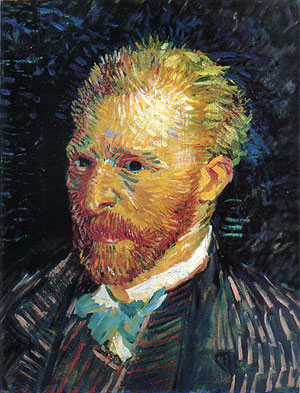
In Paris, he lived with his brother, Theo, and encountered Impressionist and Post-Impressionist painting. Van Gogh worked briefly at Fernand Cormon’s atelier, where he met Henri de Toulouse-Lautrec. The artist also met Emile Bernard, Edgar Degas, Paul Gauguin, Camille Pissarro, and Paul Signac at that time. Flowers, portraits, and scenes of Montmartre, as well as a brighter palette, replaced his earlier subject matter and tonalities. Van Gogh often worked in Asnières with Bernard and Signac in 1887.
In February of the following year, van Gogh moved to Arles, where he painted in isolation, depicting the Provençal landscape and people. Gauguin joined him in the fall, and the two artists worked together. Van Gogh suffered his first mental breakdown in December 1888; numerous seizures and intermittent confinements in mental hospitals in Arles, Saint-Rémy, and Auvers-sur-Oise followed from that time until 1890. Nevertheless, he continued to paint. In 1890, van Gogh was invited to show with Les Vingt in Brussels, where he sold his first painting. That same year, he was represented at the Salon des Indépendants in Paris. Van Gogh shot himself on July 27, 1890, and died on July 29 in Auvers-sur-Oise, France.